
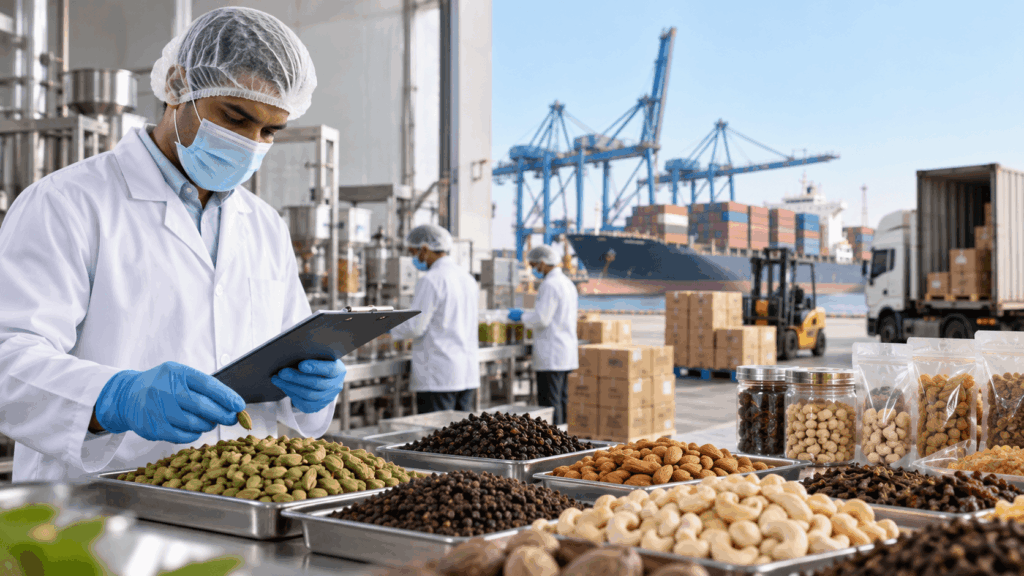
Certifications & Quality Standards in Food Export
When importing spices, dry fruits, or beverages from overseas, quality certifications aren’t a “nice to have” — they’re the deciding factor in whether a shipment clears customs, passes retailer audits, and earns repeat business. At Escol International, certifications form the backbone of how we operate, giving global buyers confidence long before the first container ships.
Why Certifications Are Non-Negotiable in Food Export
- Regulatory clearance: Many countries require documented proof of food safety compliance before allowing imports.
- Retailer requirements: Supermarket chains and food manufacturers often mandate ISO or HACCP compliance from their suppliers as a baseline.
- Risk reduction for buyers: Certified suppliers reduce the buyer’s exposure to contamination, mislabeling, or inconsistent grading issues.
The Certifications Behind Escol International
- ISO 9001:2015 — Confirms our quality management systems meet globally recognized standards for consistency and continuous improvement.
- ISO 22000:2018 — A food safety management certification that governs how we handle products from sourcing to packaging.
- GMP (Good Manufacturing Practices) — Ensures our facilities follow hygienic, standardized production processes.
- HACCP Certification — Identifies and controls food safety hazards at every critical point in our supply chain.
- FSSAI Approval — India’s domestic food safety authority approval, a baseline requirement for credible exporters.
How This Translates to Buyer Confidence
For an importer evaluating suppliers, these certifications answer the questions that matter most:
- Can this supplier’s documentation survive a customs or retailer audit?
- Is there traceability from farm to final packed product?
- Will product quality remain consistent across repeat orders?
At Escol, the answer to all three is yes — supported by our farm sourcing model, controlled processing environment, and strict internal quality checks across our spice, dry fruit, and beverage lines (including tea and coffee).
Certifications open the door, but long-term partnerships are built on:
- Low MOQs that let new buyers test the relationship with smaller orders
- Private label capability for brands wanting to build their own market presence
- Faster shipping to keep supply chains lean